The customer journey is becoming more conversational. Instead of moving from search results to product pages, comparison sites and checkout flows, consumers increasingly ask AI assistants to research options, compare products and support a purchase within one interaction.
That shift raises important questions for brands: How does AI change the way customers discover and evaluate products? Which actors influence what customers see? And how can brands remain visible, credible and chosen when AI mediates more of the journey?
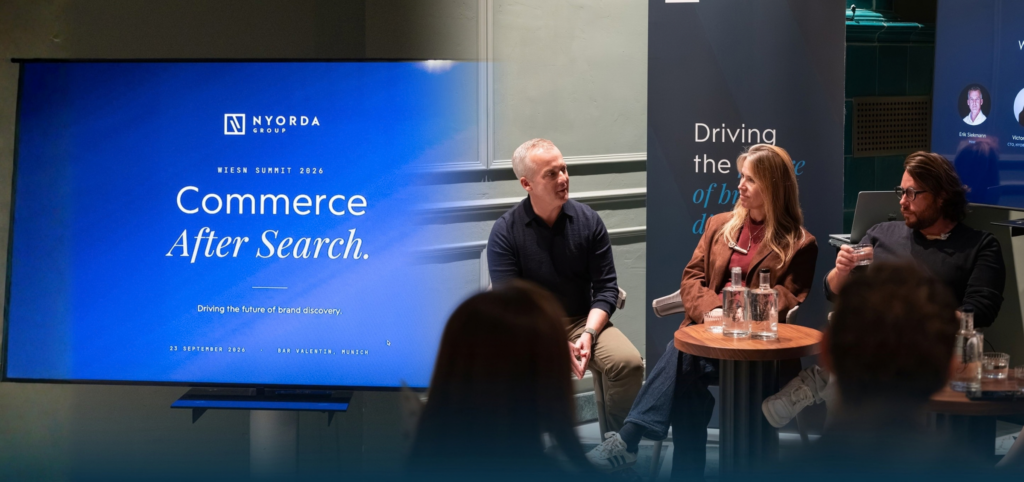
These questions shaped the NYORDA Executive Summit in Munich on 23 September. Around 30 senior leaders from companies including PAYBACK, Klarna, ABOUT YOU, Microsoft, HP and Versuni joined an afternoon focused on “Commerce After Search”.
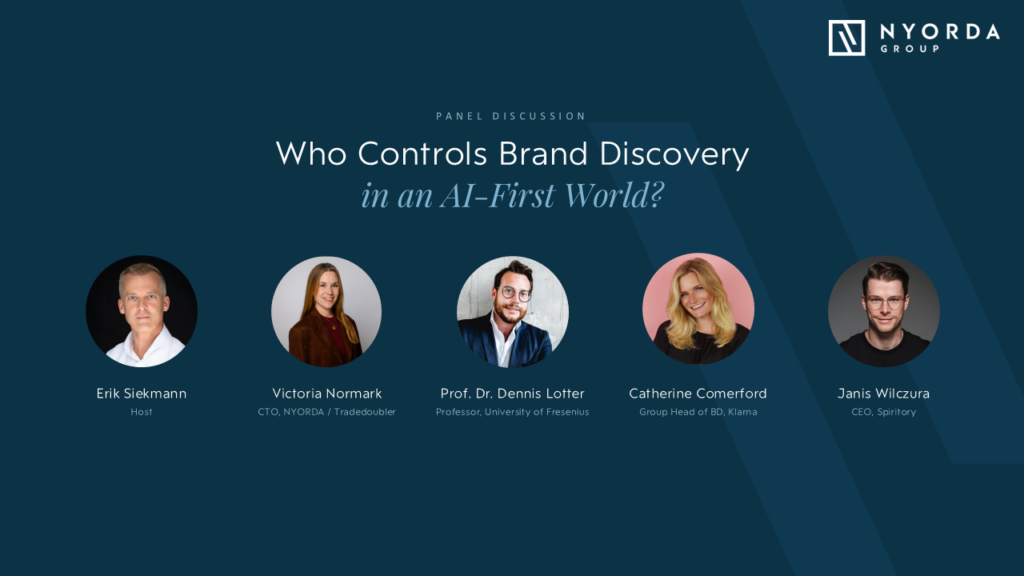
In his keynote, “AI Eats the Customer Journey”, NYORDA CEO Matthias Stadelmeyer explored how AI reshapes discovery, comparison, verification, transaction and service. The panel discussion, hosted by Erik Siekmann, examined the shift from another angle: when an AI system helps decide what a customer sees, who controls the path from discovery to purchase?
From browsing pages to briefing an assistant
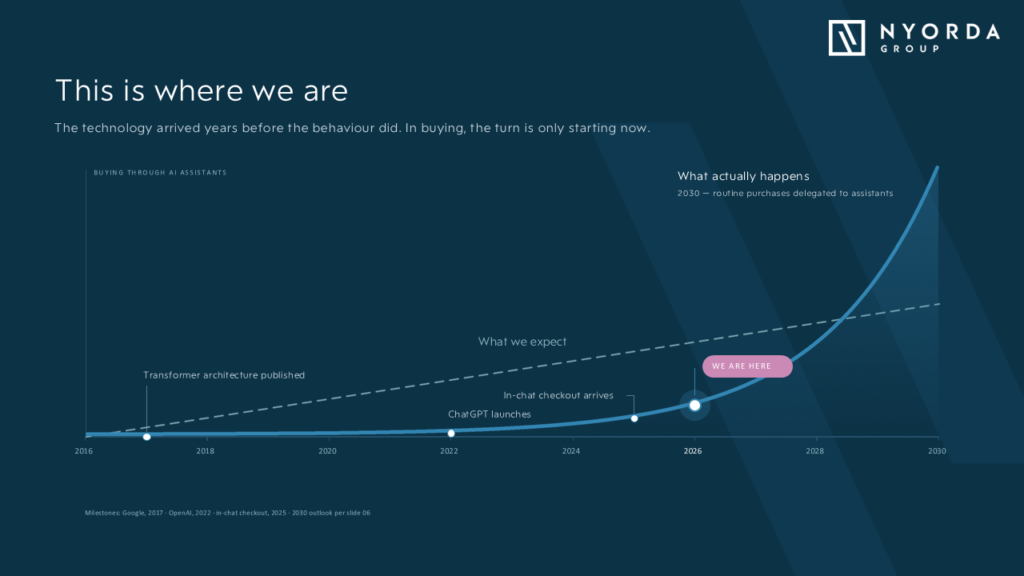
The shift towards AI-assisted commerce continues a longer evolution from physical stores to websites, search engines, marketplaces and mobile apps. The next step brings several parts of the customer journey closer together within one interaction.
In his keynote, Matthias Stadelmeyer described this as a move from browsing pages to briefing an assistant. The AI assistant is becoming an intermediary in the customer journey, influencing which brands and products enter consideration in the first place.
That changes the starting point for brands. The customer journey can begin before a customer visits a website or clicks on an advertisement. Product information, reviews, pricing, availability, delivery details and return policies all need to be clear and accessible to the systems that help shape the recommendation.
Matthias outlined four foundations for an assistant-led journey:
- product truth
- credible proof
- live operations
- permission and measurement
Brands need accurate information that machines can interpret, independent sources that support their claims, operational systems that can deliver on a recommendation, and ways to understand the value created across the journey.
He also described three areas where AI is becoming relevant for NYORDA: in its workflows, its products and the market.
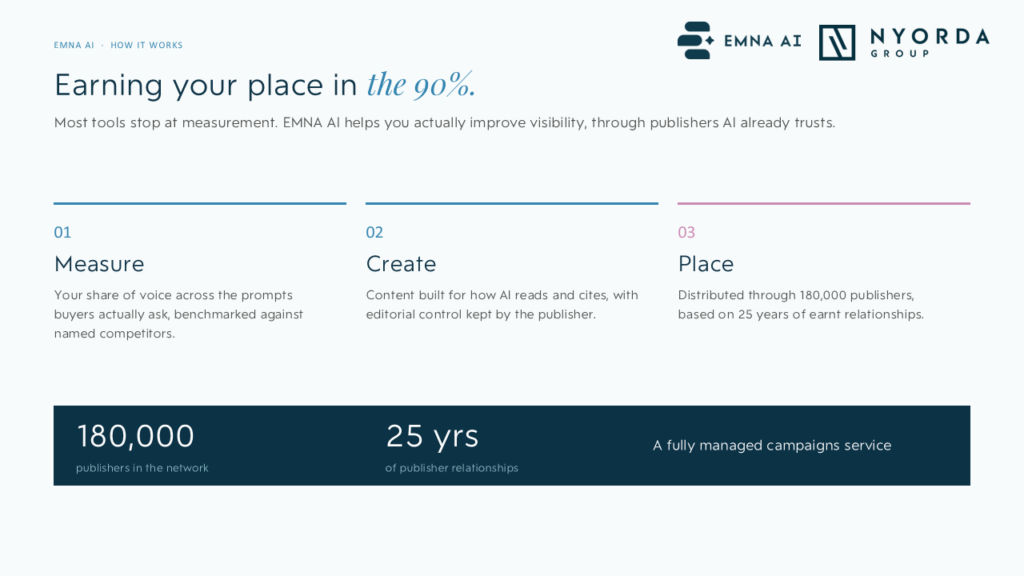
EMNA AI represents the market-facing response. It helps brands measure their visibility across the prompts buyers ask, create content designed for how AI systems read and cite information, and place that content through sources AI already trusts. Built on NYORDA’s network of more than 180,000 content partners and 25 years of partner relationships, EMNA AI reflects the shift from measuring visibility to actively improving it.
Making the brand understandable to AI
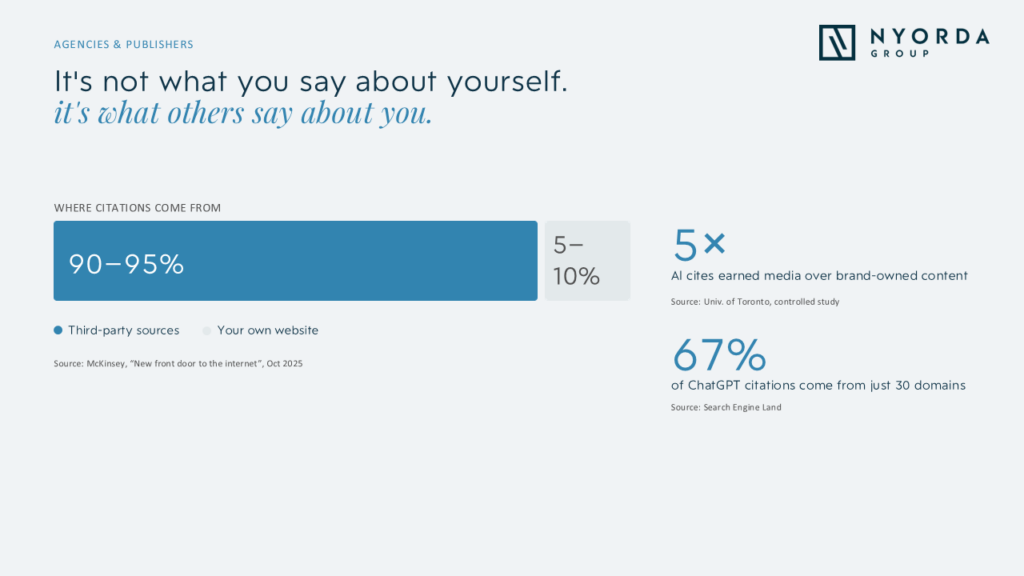
An AI assistant can only recommend what it can find, interpret and verify. That makes the quality of a brand’s information a commercial issue.
The panel discussion, hosted by Erik Siekmann and featuring Victoria Normark (NYORDA), Prof. Dr. Dennis Lotter (University Fresenius), Catherine Comerford (Klarna) and Janis Wilczura (Spiritory), brought these questions into practical focus. Catherine Comerford highlighted the importance of accurate product feeds as shopping, discovery and payment become more closely connected.
AI systems also draw on information beyond a brand’s own channels. Reviews, comparisons, publisher content and other trusted sources can help them assess whether a brand or product deserves to be recommended. Visibility depends on how a brand is described and evaluated by others, as well as on what the company says about itself.
For Janis Wilczura, this creates an opportunity for younger and more agile companies. Brands that adapt their content and data quickly can become easier for AI systems to understand, even without the history or market position of established competitors.
Who owns the customer relationship?
AI may influence the first recommendation, but the customer relationship remains a shared and contested space.
Janis Wilczura described the importance of “digital proximity”. AI can help brands reach new customers, but businesses also need reasons for those customers to return directly, build an ongoing relationship and remain connected beyond a single transaction.
Catherine Comerford focused on the measurement challenge this creates. Traditional attribution relies heavily on clicks and click-outs. In an AI-assisted journey, brands need to understand how to connect the initial recommendation with payment, the merchant relationship and the post-purchase experience.
The discussion pointed to a more distributed customer journey. AI platforms may shape discovery, while brands, retailers, publishers and payment providers each influence different parts of the path to purchase. For brands, the priority is to understand where they appear in that journey and how to retain a meaningful relationship after the recommendation.
The challenge is human as well as technical
Preparing for AI involves more than connecting new systems. Prof. Dr. Dennis Lotter emphasised that companies also need to focus on the human transformation. Teams need a clear customer problem to solve, access to relevant data and the freedom to test new tools in their everyday work.
Victoria Normark supported this point by highlighting the importance of testing, learning and accepting that no one can fully predict what will happen next.
This requires psychological safety: teams need room to experiment, adjust and sometimes fail without treating every unsuccessful test as a setback. A failed experiment can provide valuable information, while delaying action also carries a cost.
For companies, the practical task is to build the capabilities and working culture needed to keep learning. The organisations that adapt best may be those that combine technological readiness with clear purpose, practical experience and the confidence to test what works.
Preparing for a broader brand discovery journey
AI is reshaping the role of existing channels rather than make them disappear overnight. Search, social, creators, apps, publishers and retail media will continue to influence how people discover, compare and choose brands. Their roles, however, will become more closely connected.
This is the wider context for NYORDA’s portfolio. Its specialist businesses operate across different parts of the discovery journey, from partner and creator marketing to app growth, retail media and AI visibility. EMNA AI is one example of how NYORDA is turning the shift towards AI-led discovery into a concrete capability for brands.
Returning to the question at the heart of the discussion, who controls brand discovery in an AI-first world? No single actor. Influence will be shared across AI platforms, brands, retailers, publishers, creators and payment providers. The brands best placed to remain relevant will be those that make themselves understandable, credible and accessible across these environments.
Photos by Florian Haas.